
As TECO Electric & Machinery approaches its 70th anniversary, Chairman Morris Li has identified future trends, recognizing energy efficiency as the “primary key” to achieving net-zero emissions. He has articulated the company’s vision: to become a core
global driver of electrification, intelligence, and green energy. With ESCO energy services at its core, TECO helps enterprises comprehensively implement deep energy savings—from energy audits to equipment optimization.
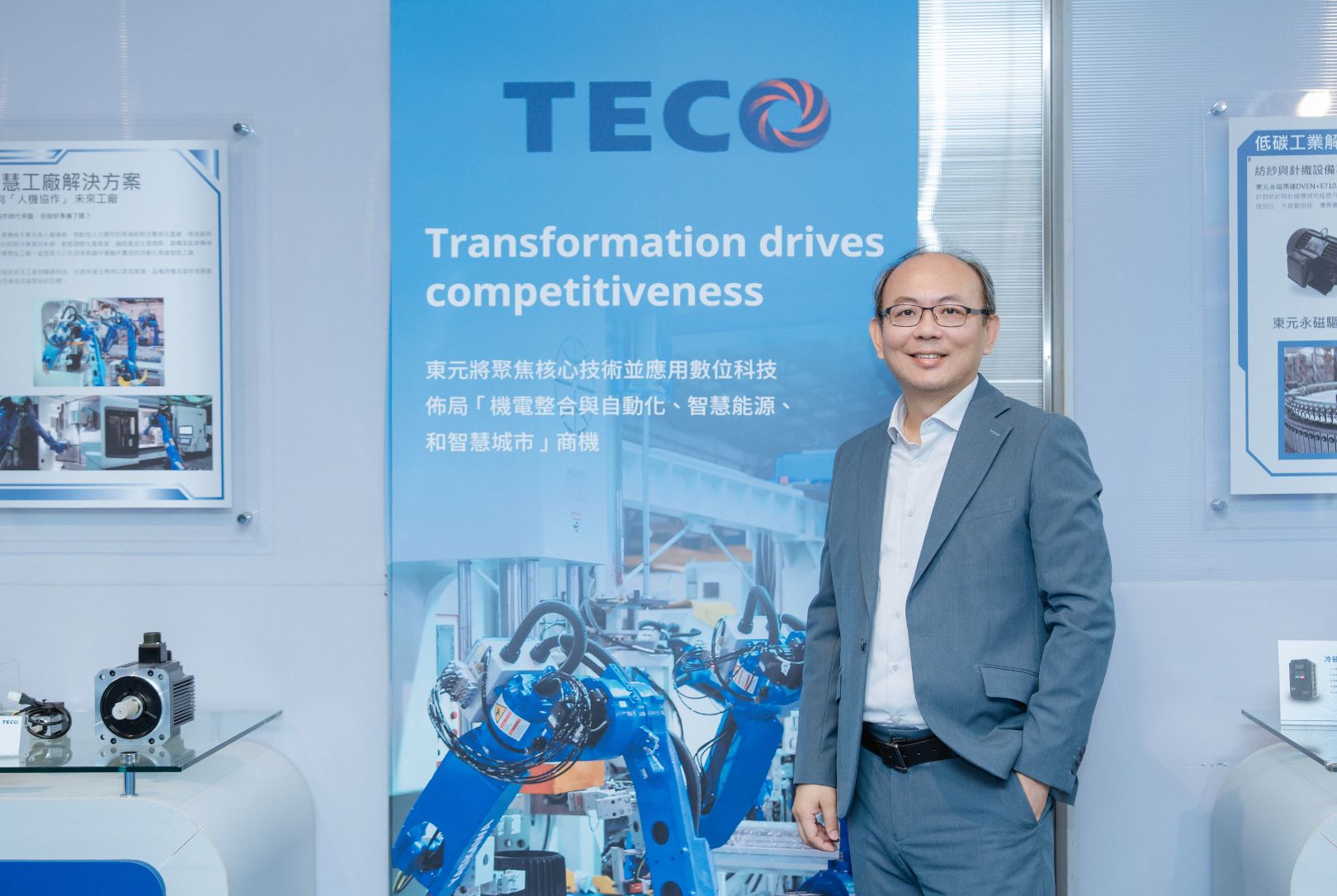
“ESCO energy technology services are a catalyst for TECO’s transformation and a key factor in enhancing corporate competitiveness,” said Heng-Wei Chen, Vice President of TECO Electric & Machinery.
Energy Efficiency Is the Best Energy
Amid the global push toward net zero, energy efficiency has emerged as the foremost critical factor. TECO advocates the philosophy that “energy efficiency is the best energy” and has established a dedicated Energy Technology Services Division spanning
its major business groups to deliver ESCO energy services. These services target high-emission enterprises as well as hospitals, schools, hotels, large shopping centers, and public infrastructure. From energy consumption measurement and carbon inventories
to energy-saving planning and execution, EMS energy management systems, performance verification, and one-stop green finance services, TECO integrates energy saving, energy creation, and energy storage into a comprehensive, three-in-one solution.
Addressing the Funding Challenge in ESCO Implementation
During the promotion of ESCO energy services, a common pain point among enterprises is a lack of funding. “After identifying energy-intensive hotspots and limitations in original system designs, the next step is comprehensive, system-wide energy-saving
planning and execution—where companies often face funding gaps,” Chen noted. TECO’s ESCO services integrate green financing while linking government subsidy mechanisms with banking institutions. Through revenue-sharing, financing, and other business models,
TECO helps reduce financial barriers for small and medium-sized enterprises, enabling rapid implementation of energy-saving projects. With its ESCO turnkey approach as a core strength, TECO has become a strategic partner for enterprises pursuing energy conservation
and carbon reduction.
Chen emphasized that beyond high-energy-consuming manufacturing industries—such as electronics, steel, paper, and cement—TECO has also built a strong track record with office buildings, department stores, large healthcare groups, universities, and major
public infrastructure projects. “Unlike traditional product offerings, ESCO energy services require meticulous, in-depth observation of usage patterns across different application scenarios. By combining historical data with real-time monitoring, we deliver
solutions precisely tailored to customer needs—this is TECO’s unique market differentiation strategy.”
Customized Solutions for Optimal Cost Efficiency
TECO has introduced AIoT-based energy management and visualization platforms to help customers monitor energy efficiency in real time. For example, air-conditioning systems are the largest energy consumers in office buildings and hospitals, while manufacturing
plants require optimization of process equipment and utility systems. TECO provides intelligent, high-efficiency drive systems and commercial HVAC solutions, achieving energy savings of 30% to 60%. Chen noted that large enterprises have diverse requirements
for power systems, control systems, and process equipment. With strong customization capabilities, TECO delivers tailor-made, cost-effective energy-saving solutions.
Chen further stressed that energy conservation and carbon reduction must be adapted to local conditions. For major electricity users, the entry point lies in improving the efficiency of high-energy-consuming equipment. However, for petrochemical and steel
industries, carbon emissions primarily stem from coal- and oil-based fuels used in production processes. The key to reducing emissions is electrification—replacing fossil-fuel-based equipment with electrically driven systems and improving process efficiency
to cut emissions at the source.
In shopping malls, for instance, beyond enhancing HVAC efficiency, layered and zoned control based on foot traffic, weather, and temperature and humidity data is essential. TECO’s comprehensive solutions span from equipment-level energy savings to system-level
optimization, combined with AI. By leveraging historical data and forecasting future operating models, TECO helps customers build optimized operational models tailored to their needs.
Rooted in Taiwan, Expanding Globally
To accelerate the implementation of deep energy-saving policies, TECO has established a comprehensive green financing framework while collaborating with ESCO partners across Taiwan to expand the energy-saving industry ecosystem. As an industry leader,
TECO enables customers to truly realize the value of energy technology services.
As European and American supply chains increasingly set carbon neutrality as a procurement requirement, TECO—through its ESCO model and global footprint—has become the preferred partner for multinational enterprises seeking energy conservation and carbon
reduction in Taiwan. In doing so, TECO is helping drive Taiwan’s industrial supply chain into a new era of sustainable competitiveness. Looking ahead, with its ESCO ecosystem strategy at the core, TECO aims to connect international supply chains’ sustainability
demands through energy-saving services, partnering with global customers to co-create a new value chain for energy efficiency.